
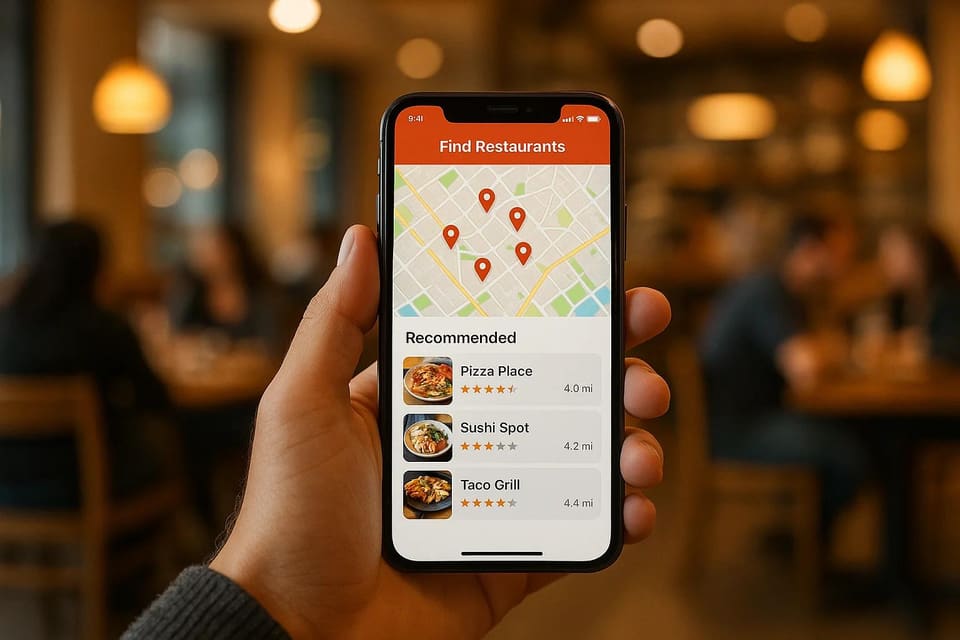
AI restaurant apps make dining decisions faster and more tailored to your preferences. These tools use machine learning and real-time data to suggest local spots based on your tastes, location, and even dietary needs. Instead of scrolling through outdated reviews, AI apps analyze menus, summarize feedback, and provide live wait times or availability. Popular options like Highlights.AI, OpenTable, and Just Salad's Salad AI simplify the process by combining personalized recommendations with features like reservation systems and pricing insights. Whether you're traveling or dining locally, these apps streamline the search for the perfect meal.
Key Features at a Glance:
- Real-Time Location-Based Suggestions: Find nearby restaurants that match your preferences.
- Menu Analysis: Get details on dishes, ingredients, and pricing.
- Availability Tracking: Check wait times and make reservations instantly.
These apps not only help diners but also improve restaurant operations, from inventory management to customer service. With AI evolving, expect even more personalized and convenient dining experiences in the future.
Key Features of AI Restaurant Finder Apps
AI restaurant finder apps go beyond basic listings, offering dynamic features that reshape how we discover and choose dining spots. These tools provide smarter, more personalized experiences, making the journey from search to table effortless. Here's a closer look at the standout features that make these apps essential for today’s diners.
Real-Time Location-Based Recommendations
Using geolocation technology, these apps pinpoint your exact location and suggest nearby restaurants that align with your preferences. But it’s not just about proximity - AI considers factors like your taste preferences, popular spots, and even the time of day or your travel plans.
For example, these apps integrate navigation tools, guiding you to restaurants that suit your needs, not just the closest options. Travelers, in particular, benefit from this feature, as they can explore menus, check prices, and get turn-by-turn directions, all in one place. This seamless location-based functionality ensures a smoother dining discovery process.
Menu Analysis and Pricing Insights
AI restaurant apps take the guesswork out of dining by analyzing menus and pricing through natural language processing (NLP) and image recognition technology. These systems break down menu details, highlighting dish ingredients, dietary options, and price points, so you can make informed choices before stepping in.
A great example is Just Salad's Salad AI. This app uses customer feedback to recommend meals tailored to individual tastes, cutting down on decision fatigue and introducing users to dishes they’ll likely enjoy. This transforms a potentially overwhelming menu into a curated, personalized experience.
Some apps go even further. Platforms like Savor use AI to score dishes and monitor their popularity over time, while others summarize user reviews to spotlight budget-friendly options. These insights make it easier to find meals that fit your budget and dietary needs, saving you time and effort.
Real-Time Availability and Wait Time Tracking
Long waits and uncertainty at restaurants are a thing of the past with real-time availability and wait time tracking. These apps integrate reservation systems and predictive analytics to provide accurate wait estimates.
Take OpenTable, for instance. It lets users check live seat availability, join waitlists, and even make reservations directly through the app. During peak hours or in busy cities, this feature is a game changer, reducing stress and improving the dining experience. By analyzing historical data, current occupancy, and typical dining trends, the app’s AI ensures accurate predictions and smoother planning.
| Feature | Example Platform | Key Benefit |
|---|---|---|
| Real-Time Location Recommendations | Google Maps | Combines navigation with personalized dining suggestions |
| Menu Analysis & Pricing | Just Salad's Salad AI | Offers tailored meal recommendations |
| Wait Time & Availability Tracking | OpenTable | Provides live reservation and waitlist updates |
Together, these features create a dining experience that’s smarter, faster, and tailored to individual needs. As technology advances, these apps are increasingly combining multiple capabilities to offer all-in-one solutions for modern diners.
Top AI Apps for Finding Local Restaurants
AI-powered tools are changing the way we discover local dining spots, offering tailored recommendations that go beyond simple reviews. Each platform brings its own unique features to the table, making dining decisions easier and more personalized.
Highlights.AI: Personalized Travel and Dining Itineraries
Highlights.AI takes a unique approach by combining restaurant discovery with full travel planning. It’s not just about finding a place to eat - it’s about creating a complete experience. The platform’s AI assistant, "Sally", crafts detailed day-by-day itineraries that include dining options alongside visits to landmarks and attractions.
For example, a "Foodies in Rome" itinerary might pair authentic Italian restaurants with nearby historic sites. Whether you’re savoring street food in Hanoi, enjoying chic cafes in Paris, or relaxing in a cozy London pub, Highlights.AI aligns dining recommendations with your travel plans and preferences1.
The pricing is flexible, catering to different needs. Basic itineraries are free, while premium plans range from $2 to $7, offering more detailed and curated options. This makes it a great choice for both casual travelers and those who want a deeper dive into local dining as part of their journey.
Other Popular AI Restaurant Finders
While Highlights.AI blends dining with travel planning, some apps are laser-focused on helping you find the perfect local restaurant. For instance, the Restaurant Finder Agent uses AI to deliver top-rated dining spots tailored to your location, offering instant updates and suggestions based on your preferences.
These apps go beyond static reviews, analyzing real-time factors like your current location, dining history, and preferences. They even account for dynamic elements such as wait times, seasonal menu changes, and local events that could impact your experience.
OpenTable has also stepped up its game, evolving from a simple reservation tool into a sophisticated dining assistant. Its AI features predict wait times, suggest the best dining hours, and recommend restaurants based on your booking history and preferences. Plus, it provides real-time updates on menus, pricing, and availability, ensuring you have the most accurate information at your fingertips.
These platforms continually refine their suggestions by learning from your habits, making it easier than ever to discover dining experiences that match your tastes and lifestyle. Whether you’re planning a night out or exploring a new city, these AI tools add a layer of convenience and customization to your search.
How AI is Changing the Restaurant Industry
AI is reshaping how restaurants operate - from creating personalized customer experiences to improving back-end processes. These advancements are helping restaurants deliver better service while running more efficiently.
Better Customer Experience Through AI
AI is making dining more personal and seamless. For instance, Just Salad's Salad AI suggests meals tailored to customer preferences, though only 32% of restaurant operators are currently using such tools.
McDonald's has introduced "Ask Pickles", an AI-powered chatbot designed to assist employees during their shifts. Meanwhile, Wendy's collaborated with Google Cloud to create an AI-driven drive-thru system. This technology interprets customer orders automatically, freeing up staff to handle other tasks. The result? Faster service and happier customers.
Interestingly, 20% of U.S. consumers now use AI tools like ChatGPT to research restaurants, signaling a shift in how people decide where to dine.
AI-Driven Inventory and Menu Management
AI is also tackling common operational challenges like food waste, inventory management, and menu planning. Wendy's, for example, has teamed up with Palantir Technologies to implement an AI-powered system that minimizes waste and ensures optimal stock levels. Yum Brands uses AI to analyze sales patterns, seasonal trends, and local events, helping them make smarter inventory decisions across their many locations.
Australian Venue Co. is leveraging AI to refine its menu by analyzing dish performance. This data helps them adjust menu placements and pricing to encourage upselling and improve profitability.
Christian Berthelsen, Chief Technology Officer at Fourth, highlights how AI simplifies restaurant operations and boosts profitability.
AI doesn't stop there - it also aids in labor management. By analyzing historical data, weather patterns, local events, and seasonal trends, AI can predict staffing needs with precision. This helps restaurants control labor costs while ensuring they have enough staff to maintain service quality. Plus, modern AI tools integrate easily with existing point-of-sale systems, making implementation straightforward and providing quick benefits. Together, these advancements create smoother operations and a better dining experience for customers.
The Future of AI in Restaurant Discovery
The way we discover restaurants is changing fast, thanks to AI making the process more intuitive and tailored to individual preferences. Looking ahead, several exciting advancements promise to reshape how we choose where to dine, offering increasingly customized and seamless experiences.
New Features in AI Restaurant Finders
One major development on the horizon is personalized meal planning. Future AI-powered apps could create weekly dining plans based on data from your fitness tracker, dietary needs, and favorite cuisines. Imagine an app suggesting meals that not only match your taste but also align with your health goals.
Dietary and allergy filters are also set to become far more advanced. These tools will cross-check menu ingredients with your health profile, flagging allergens and even recommending safe alternatives. For those managing complex dietary restrictions - like being gluten-free, vegan, or juggling multiple allergies - this feature could take the stress out of dining out.
Another game-changer is real-time feedback systems. These will allow AI to learn from your ratings and adapt its recommendations instantly. Whether it’s the ambiance, quick service, or specific flavors you loved, the AI will fine-tune future suggestions based on what matters most to you.
Meanwhile, AR and VR tools are poised to enhance the decision-making process. Imagine viewing 3D representations of menu items before ordering - perfect for trying unfamiliar dishes or exploring new cuisines with confidence.
Integrating AI with Smart Devices and Wearables
AI is also becoming more integrated with the devices we use daily, making dining suggestions even more personalized and convenient. For instance, smartwatches could suggest lunch options based on your morning workout, step count, and current location - all while factoring in your schedule. This hands-free approach transforms restaurant discovery from a reactive process into a proactive one.
Voice-activated tools are another exciting area. Smart assistants like Alexa or Google Home will soon let you find and book restaurants with simple commands. Imagine saying, “Find a cozy Italian spot for dinner at 7 PM,” and having your smart speaker not only suggest options but also handle the reservation.
In-car AI systems are set to revolutionize dining on the go. Your car’s navigation could recommend restaurants along your route, taking into account traffic, arrival times, and even your fuel level. This seamless integration makes dining decisions a natural part of your travel plans.
AI will also combine location services, health data, and personal preferences to deliver hyper-personalized suggestions. For example, your fitness tracker might guide you toward a quick, healthy option after a workout - or a relaxing spot if your stress levels are high. You could even get instant notifications when a table opens up at a favorite restaurant or when a nearby eatery launches a special offer tailored to your tastes.
These advancements promise to make restaurant discovery feel less like a chore and more like getting advice from a trusted friend who knows exactly what you’re in the mood for. With AI continuing to evolve, dining out will become smarter, smoother, and far more enjoyable.
Conclusion: Improving Local Dining with AI
AI-powered restaurant discovery apps have reshaped how we find and enjoy local dining. By offering personalized recommendations, real-time availability, and easy booking options, these tools make choosing where to eat both faster and more enjoyable.
For diners, AI removes the frustration of calling multiple restaurants or wading through endless reviews, delivering key details and recommendations in seconds. For restaurants, it helps streamline operations by optimizing inventory, reducing waste, and improving customer retention - a true win-win.
These apps aren't just for locals either. Travelers benefit greatly, with platforms like Highlights.AI integrating dining options into complete travel plans. Whether you're on a food-centric vacation or squeezing in a quick meal during a business trip, AI makes finding the perfect spot effortless.
As AI technology continues to evolve, incorporating smarter devices and deeper personalization, discovering great local restaurants will only get simpler. What used to be a tedious process has turned into a seamless way to enjoy amazing meals with minimal effort.
Frequently asked questions
How do AI-powered apps recommend restaurants that match my tastes and dietary preferences?
AI-driven restaurant apps rely on smart algorithms to dive deep into your dining preferences and habits. They look at details like your go-to cuisines, past meal choices, and any dietary restrictions you’ve shared. By blending this information with local restaurant reviews and ratings, these apps can recommend dining spots that align perfectly with your tastes. Many of these apps also let you fine-tune your preferences - whether it’s steering clear of gluten or focusing on vegan-friendly options. This way, finding great local restaurants becomes a breeze and turns into a fun, personalized experience!
Can AI apps help you find great restaurants when visiting a new city?
Exploring a new city and finding great places to eat just got easier with AI-powered apps. Take Highlights.AI, for instance - it creates curated travel plans that include personalized dining recommendations. Whether it's local favorites or tucked-away gems, these tools help you discover spots that match your preferences, saving you time and making every meal a highlight of your adventure.
How do AI features like real-time availability and wait time tracking enhance the dining experience?
AI-powered tools are changing the way we dine out, making the experience smoother and more enjoyable. Features like real-time updates on table availability and wait times allow you to plan your visit with precision, helping you avoid surprises and unnecessary delays. What’s more, if your favorite restaurant is fully booked, these tools can recommend nearby alternatives, ensuring you don’t miss out on a great meal. This blend of convenience and tailored suggestions is reshaping how we explore and enjoy local dining options.