
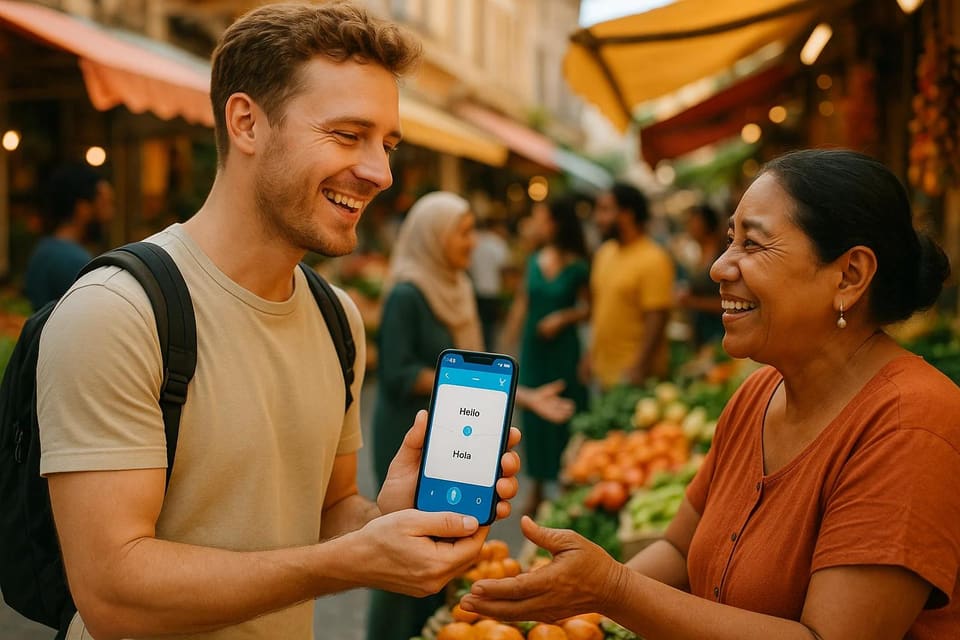
Real-time AI translators are reshaping travel by eliminating language barriers. They help travelers communicate effectively in foreign countries, making tasks like ordering food, asking for directions, or handling emergencies much easier. These tools use advanced technology like neural networks and natural language processing to provide instant, context-aware translations for speech, text, and images.
Key Benefits:
- Daily Travel Made Easier: Translate menus, navigate public transport, and negotiate prices in markets without confusion.
- Access to Local Experiences: Engage deeply with locals, participate in events, and learn about traditions.
- Enhanced Safety: Communicate clearly during emergencies or when explaining medical needs.
- Offline Functionality: Basic translations even without internet access.
While these tools are transforming travel, they still face limitations with rare languages, cultural nuances, and reliance on internet connectivity. Future advancements like augmented reality and smarter contextual translations promise to make international travel even more accessible and enjoyable.
How Real-Time AI Translators Work
Real-time AI translators combine machine learning, neural networks, and cloud computing to process your spoken or typed input and convert it into another language almost instantly. They aim to preserve the context, tone, and intent of your message, making communication smoother and more natural. These speedy processes are revolutionizing how people interact while traveling.
Main Features of Real-Time AI Translators
One standout feature is speech-to-speech translation, where you speak in your language, and the device quickly outputs your message audibly in the target language. This two-way communication adapts to various accents and speaking speeds, enabling seamless conversations.
Another key function is text-to-speech translation, which bridges the gap between written and spoken communication. You can type a message, and the AI will read it aloud in the target language with natural pronunciation. This feature is especially handy in noisy environments or when explaining complex ideas that are easier to write than to speak.
Text-to-text translation serves as the backbone of these technologies. For example, you can snap a photo of a menu, street sign, or document, and the AI instantly overlays the translation on your screen. This real-time visual translation is invaluable for navigating foreign settings.
For added convenience, many devices include offline capabilities, storing essential language data locally. This allows basic communication even in areas with limited or no internet connectivity.
These features far surpass older translation methods, making communication more efficient and accessible.
AI Translators vs. Old Translation Methods
In the past, travelers relied on phrasebooks, which often made even simple conversations a slow and frustrating experience. Finding the right phrase could take several minutes, turning quick exchanges into awkward delays.
Human interpreters, while accurate and skilled at understanding cultural nuances, are often impractical for travel. They can be costly and are rarely available on demand. AI translators, on the other hand, are accessible anytime and are usually more affordable.
Dictionary-based translation, which required manually looking up words and piecing together sentences, often produced awkward or grammatically incorrect results. Modern AI translators solve this problem by understanding grammar and context, generating sentences that native speakers can easily understand.
These advancements turn clunky, hesitant communication into smooth, real-time conversations, encouraging deeper and more meaningful interactions.
Current Technology Limits
Despite their impressive capabilities, real-time AI translators still face some challenges. Accuracy can vary depending on the language pair and the complexity of the conversation. Popular language pairs tend to perform better, while less common languages or highly specialized topics may result in less reliable translations.
Another limitation is the reliance on an internet connection. While offline modes can handle basic translations, more nuanced expressions, idioms, and culturally specific language often require cloud-based processing. In areas with poor connectivity, translation quality may decline.
Capturing cultural subtleties like humor, sarcasm, or regional idioms also remains a challenge. AI systems are great at literal translation but may miss these nuances, potentially leading to misunderstandings.
Environmental factors can also affect performance. Background noise, strong accents, or rapid speech can make it harder for the system to accurately recognize spoken words, especially in busy public spaces.
Finally, practical issues like battery life and device reliability are worth considering. Translation processes can drain battery power quickly, so keeping your device charged is crucial, especially when you need it most.
Benefits of Real-Time AI Translators for Travelers
Real-time AI translators have revolutionized the way travelers navigate foreign lands. By breaking down language barriers, these tools make journeys smoother and more enjoyable.
Better Communication in Daily Travel Situations
Real-time AI translators shine in everyday travel scenarios, offering practical solutions for common challenges.
Ordering food is no longer a guessing game. With instant menu translations and the ability to explain dietary restrictions or preferences, you can confidently communicate with restaurant staff. Instead of pointing at random dishes, you can discuss ingredients, preparation methods, and even explore local culinary traditions.
Getting directions becomes a breeze. Whether you're navigating Tokyo's intricate subway system or searching for a tucked-away café in Barcelona, you can ask locals for help and understand their detailed responses. No more relying on vague gestures or incomplete maps.
Shopping and bargaining feel more engaging when language isn't a hurdle. In bustling markets from Istanbul to Bangkok, you can negotiate prices, ask about the origins of products, and understand vendor recommendations. These interactions not only lead to better purchases but also enrich your experience with local customs.
Transportation conversations are simplified. Whether you're explaining your destination to a taxi driver or discussing alternate routes with train staff, clear communication ensures smoother travel. It also reduces the stress of misunderstandings or concerns about being overcharged.
These practical improvements set the stage for deeper connections and more immersive travel experiences.
Access to Local Experiences
AI translators open doors to experiences that might otherwise remain out of reach due to language limitations.
Participating in local events becomes much easier. Whether you're attending a festival in rural Mexico or a community gathering in a Vietnamese village, you can understand announcements, ask questions about traditions, and engage with other attendees. This turns you from an observer into an active participant.
Learning from locals gains depth and authenticity. Instead of sticking to small talk, you can dive into meaningful conversations about local history, get insider tips on hidden gems, and uncover stories that guidebooks often miss. A chat with a shopkeeper in Prague or an artist in São Paulo can offer perspectives that transform your understanding of a place.
Joining group activities becomes more approachable. Whether you're taking a cooking class in Thailand, learning the tango in Argentina, or hiking the Swiss Alps with a group, being able to communicate with instructors and fellow participants enhances the experience and fosters connections.
Understanding cultural context is another perk. When visiting temples, museums, or historical landmarks, you can ask guides follow-up questions and engage in discussions that add depth to your visit. This makes each experience far more memorable and meaningful.
Enhanced Safety and Confidence
Real-time AI translators also play a crucial role in ensuring safety and boosting confidence during travel.
In emergencies, clear communication can make all the difference. Whether you're describing symptoms to healthcare providers, explaining allergies, or discussing treatment options, accurate translation ensures you get the care you need. Similarly, in legal or urgent situations, being able to communicate clearly helps avoid misunderstandings and speeds up assistance.
Avoiding scams becomes easier when you can understand explanations and pricing. For example, if a taxi driver claims their meter isn't working, you can ask follow-up questions to clarify the situation. This helps you make informed decisions and avoid being taken advantage of.
The confidence boost from effective communication transforms how you travel. Feeling understood encourages you to explore less-touristy destinations, try new activities, and interact with locals more freely. This confidence often leads to unexpected adventures and richer experiences.
Problem-solving is far less stressful when language isn't a barrier. Whether you're dealing with lost luggage, last-minute booking changes, or issues with accommodations, being able to explain the problem and understand solutions ensures quicker resolutions. Airline staff, hotel representatives, and service providers can assist more effectively when communication is clear.
Practical Uses of Real-Time AI Translators in Travel
Real-time AI translators have become indispensable tools for travelers, transforming potential obstacles into smooth, memorable experiences. Their effectiveness shines when used thoughtfully in various travel scenarios.
Getting Around and Finding Places to Stay
Navigating unfamiliar environments becomes far easier with the help of real-time translation tools.
Hotel communication is simplified, allowing you to clearly explain your needs during check-in, whether it's requesting extra towels, addressing maintenance issues, or resolving Wi-Fi concerns. This is especially helpful in places where English isn't commonly spoken.
Public transportation becomes less intimidating. From interpreting subway announcements in Seoul to asking bus drivers about specific stops in rural Italy, these tools help you avoid confusion, missed connections, and wasted time.
Taxi and rideshare conversations become more efficient. You can provide precise directions, discuss alternate routes, or communicate time constraints without any misunderstandings.
Exploring neighborhoods takes on a whole new dimension. You can ask locals for safety tips, recommendations, or insights on local customs. Instead of relying solely on guidebooks, you get real-time advice tailored to your needs, whether it's the best time to visit a landmark or how to navigate cultural norms.
Next, these tools elevate the experience of dining abroad.
Dining and Trying Local Food
Food is often one of the highlights of travel, and real-time translation ensures you can fully enjoy this aspect without language barriers.
Decoding menus becomes more insightful. Instead of just translating dish names, you can understand preparation methods, key ingredients, and even the story behind a dish. This deeper understanding helps you make better choices and discover new favorites.
Dietary restrictions and allergies can be communicated clearly. Whether it's a peanut allergy, religious dietary rules, or personal preferences, you can explain your needs in detail, ensuring safer and more accommodating dining experiences.
Wine and beverage selection turns into an opportunity to learn. You can discuss local wine regions, ask about flavor profiles, or discover traditional drinks that perfectly complement your meal.
Street food adventures feel more approachable. You can ask vendors about ingredients, freshness, or preparation methods, while also uncovering recommendations for must-try local specialties.
Cooking classes become immersive experiences. You can ask detailed questions about techniques, learn the cultural significance of recipes, and connect with instructors and classmates on a deeper level.
Just as these tools enhance dining, they also open doors to meaningful cultural exchanges.
Meeting Locals and Learning About Their Customs
Breaking language barriers fosters genuine connections and enriches your understanding of local traditions.
Cultural site visits become more engaging when you can interact with guides beyond scripted tours. Ask about historical events, architectural details, or ongoing preservation efforts to gain a richer appreciation for what you're seeing.
Festival and event participation shifts from passive observation to active involvement. Whether it's a religious ceremony or a vibrant local celebration, being able to understand explanations and ask respectful questions adds depth to the experience.
Artisan workshops and local businesses offer more than just souvenirs. You can learn about traditional crafting techniques, hear the history behind unique products, and connect with the personal stories of artisans.
Family interactions and homestays turn into meaningful exchanges. Share stories about your own culture, learn about their family traditions, and participate in daily activities with a clear understanding of what's happening around you.
Visits to religious and spiritual sites become more respectful and insightful. You can ask about customs, learn proper etiquette, and understand the spiritual significance of different areas, allowing you to engage with reverence and curiosity.
What Travelers Should Know and Future Developments
As real-time AI translation tools continue to advance, travelers need to know how to make the most of these technologies while staying updated on emerging innovations that could reshape the way we explore the world.
Choosing the Best AI Translation Tool
Picking the right translation tool can make or break your travel experience. Here are some key factors to consider:
- Language compatibility: Major languages like Spanish, French, and Mandarin are widely supported, but if you're heading to a country with less common languages or regional dialects, double-check the tool's coverage. Some apps excel with European languages but may falter with dialects in Southeast Asia or Africa.
- Offline functionality: When you're in remote areas or places with spotty internet, offline mode is a lifesaver. Make sure the app works even without a connection.
- Privacy and data security: Be cautious about how your data is handled. Some apps store conversations on external servers, which could pose risks in countries with strict data rules. Look for tools that process translations locally or provide clear options for deleting stored data.
- Battery usage: Translation apps can drain your battery quickly. Choose tools with power-saving options or pack a portable charger.
- Translation accuracy: Not all tools are created equal. While many handle basic phrases well, more complex conversations - like explaining medical issues or resolving legal matters - require a tool with advanced capabilities. Test apps in various scenarios before relying on them for critical interactions.
Once you've chosen a tool that fits your needs, the next wave of advancements promises even greater convenience and integration.
Future Integration with Travel Platforms
The future of travel tech is all about merging translation tools with broader travel services, making communication effortless.
- Smart itinerary integration: Imagine real-time translation built directly into travel planning apps like Highlights.AI. This would let you communicate seamlessly while following your personalized itinerary, whether you're wandering through a museum in Paris or navigating the streets of Rome.
- Contextual translation: Future tools may get smarter at recognizing your location - like a restaurant, hotel, or train station - and adjusting their translations to suit the setting. They could even suggest useful phrases tailored to the situation.
- Voice-activated travel assistance: Picture asking your device for restaurant recommendations in English, having it translate the query into the local language, and then providing suggestions, directions, and even reservation options - all in one go.
- Augmented reality (AR) integration: Soon, your smartphone camera might overlay translated text onto signs, menus, and informational boards, making foreign environments instantly more navigable.
- Predictive communication: Advanced AI systems could anticipate common travel scenarios, preload useful phrases, and provide cultural context to make interactions smoother and more natural.
Breaking Down Barriers to International Travel
AI translation technology is opening doors for more people to explore the world with confidence.
- Building confidence: For many travelers, especially those going solo, these tools make it easier to visit destinations where they don't speak the language. The result? Longer trips, more adventurous plans, and deeper connections with local cultures.
- Budget-friendly travel: Translation apps empower travelers to choose local accommodations, dine at neighborhood spots, and navigate public transportation - all of which can save money while delivering a more authentic experience.
- Improved accessibility: These tools are a game-changer for travelers with disabilities. Text-based translation features can assist those with hearing impairments, while others may find it easier to communicate their needs to service providers or transportation operators.
- Building cultural bridges: Beyond just translating words, modern tools can provide cultural insights, helping travelers navigate social norms and communicate respectfully with local communities.
- Emergency readiness: Whether it's describing symptoms to a doctor, understanding evacuation instructions, or contacting emergency services, translation tools can be lifesaving during medical, natural, or security emergencies.
AI translation technology is evolving rapidly, with improvements in accuracy, speed, and cultural understanding arriving regularly. As these tools integrate further with travel platforms, the vision of a world without language barriers becomes increasingly achievable.
Conclusion: How AI Translators Are Changing Travel
Real-time AI translators are reshaping the way we travel, turning once-daunting language barriers into manageable challenges and opening doors to deeper connections with local communities.
Thanks to these tools, practical communication is easier than ever. Travelers can navigate intricate transit systems, decode complex menus, and handle emergencies with confidence. Tasks that once felt overwhelming now feel routine, making every step of the journey smoother.
These advancements are making travel more inclusive. People are no longer hesitant to explore destinations where they don’t speak the language, and solo travelers, in particular, are venturing off the beaten path with newfound confidence. The fear of miscommunication no longer limits exploration.
By integrating elements of cultural awareness, AI translation tools not only facilitate communication but also enrich interactions, helping travelers engage with local traditions and experiences on a deeper level.
The numbers speak for themselves: the AI tourism market is forecasted to hit $13.38 billion by 2030, highlighting how essential these tools have become in the travel industry. This growth reflects a shift in how we approach international travel, with technology playing a central role.
Platforms like Highlights.AI are combining real-time translation with personalized itinerary features, creating a seamless travel experience. This blend of technology transforms language differences into opportunities for richer, more meaningful travel moments.
In short, AI translators are doing more than just breaking down language barriers - they’re building bridges that make travel safer, more accessible, and more enriching for everyone.
Frequently asked questions
How do real-time AI translators understand cultural nuances and idioms?
Real-time AI translators rely on advanced machine learning models to go beyond simple word-for-word translation. These systems are designed to grasp the context of a sentence, allowing them to interpret idiomatic expressions and subtle cultural nuances. The result? Translations that feel more natural and aligned with how people actually speak. Using vast datasets and deep learning techniques, these translators can identify and adjust to cultural elements like local customs, humor, or preferred phrasing. This makes it easier for travelers to navigate conversations, even when faced with tricky regional expressions, ensuring smoother and more genuine communication.
What should you look for in a real-time AI translation tool when traveling?
When picking a real-time AI translation tool for your travels, it's important to prioritize accuracy, speed, and reliability - these factors are key to clear and effective communication. Choose a tool that’s simple to navigate, secure, and capable of interpreting local dialects and idiomatic phrases, so your conversations flow naturally. Features like offline capability and device integration (such as with smartphones or smart earbuds) can make a big difference, especially in places where internet access is spotty. Opt for a tool that operates smoothly and aligns with your travel style, whether you're wandering through vibrant cities or venturing into more remote areas.
How could future AI translation technology make traveling even easier?
AI translation technology is on the brink of transforming how we travel, with the promise of more accurate, real-time translations that understand context and tone. Imagine effortlessly ordering food, asking for directions, or even having meaningful conversations with locals - all without the usual language barriers. Beyond just translating words, future AI tools could incorporate insights into local customs and history. This added layer of understanding would not only help travelers navigate new places with confidence but also offer a richer, more immersive experience. It’s about connecting with a destination on a deeper level, making every trip feel truly special.