
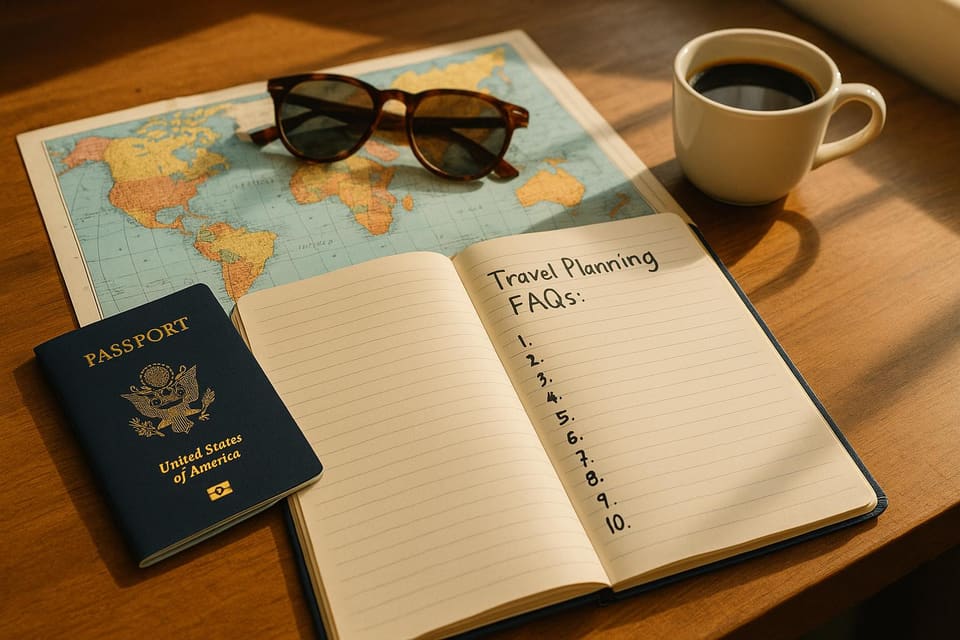
- When to Start Planning: Book domestic flights 28 days ahead and international travel 60–90 days in advance for the best prices.
- Travel Documents: From May 7, 2025, a REAL ID or passport is needed for U.S. domestic flights. International trips require passports valid for at least six months beyond travel dates. Check visa requirements early.
- Budgeting: Plan for flights, lodging, meals, and hidden costs like baggage fees or resort charges. Use loyalty programs and set a daily spending limit.
- Accommodation Choices: Decide between hotels (convenience, central locations) and vacation rentals (space, privacy, cost-effective for groups).
- Booking Flights: Best prices are midweek (Tuesdays/Wednesdays). Use price alerts and consider bundling flights with hotels.
- Packing Tips: Pack light with versatile clothing, follow TSA rules, and use packing cubes for organization.
- AI Travel Tools: Platforms like Highlights.AI create tailored itineraries based on your preferences, saving time and money.
- Backup Plans: Confirm bookings, carry backups of documents, and prepare for unexpected changes with travel insurance and emergency funds.
Quick Comparison: Hotel vs. Vacation Rental
| Hotels | Vacation Rentals |
|---|---|
| Central locations | More space and privacy |
| On-site services | Cost-effective for groups |
| Loyalty programs | Kitchens for self-catering |
| Potential hidden fees | Self-service accommodations |
Basic Travel Planning Requirements
Getting the basics of travel planning right can make or break your trip. Two key questions every traveler needs to answer are: When should you start planning? and What documents are required? Whether you're planning a quick domestic getaway or an international adventure, these are the building blocks for a smooth journey. Let’s dive into the details.
When Should I Start Planning My Trip?
Timing your bookings correctly can save you both money and stress. For domestic flights, aim to book about 28 days in advance to save up to 24%. If you're planning international travel, booking around 60 days ahead often gets you the best prices.
Christina Bennett, Priceline’s travel expert, simplifies it with what she calls the "rule of 90":
"Generally, the further you plan to travel, the further out you should plan your travel. Based on pricing trends, I've dubbed the 'rule of 90' for summer travel, meaning you should seek to book any international travel at least 90 days out and any domestic travel within 90 days of departure."
Seasonal trends also play a big role. For example, trips in late August can cost nearly 30% less than those in early July. Similarly, the best time to book winter holiday travel is during September or October.
Flexibility with your travel dates can also lead to big savings. Traveling on off-peak days - like Mondays, Tuesdays, or Wednesdays - can significantly cut costs compared to weekend travel. Even shifting your trip by just a few days during busy seasons can make a noticeable difference.
Once your travel dates are set, the next step is ensuring you have the correct documents.
What Documentation Do I Need to Travel?
Having the right travel documents is non-negotiable. Missing even one can derail your plans, so it’s crucial to double-check requirements well ahead of time.
For domestic travel within the U.S., adults aged 18 and older must have a valid federal or state-issued photo ID that includes your name, date of birth, gender, and expiration date. Starting May 7, 2025, a REAL ID-compliant driver’s license or another approved form of ID will be required for domestic flights. While the TSA currently accepts expired IDs up to two years past expiration, renewing early is always a safer bet.
For international travel, a valid passport is a must for all travelers. Keep in mind that passport cards are not accepted for international air travel - you’ll need the full passport book. Many countries require your passport to remain valid for at least six months beyond your travel dates, so check your expiration date at least nine months in advance to allow time for renewal if necessary.
Visa requirements can vary widely depending on your destination. For example, starting January 8, 2025, U.S. citizens visiting the UK will need an Electronic Travel Authorization (ETA) costing £10 (around $12.75). Similarly, beginning April 10, 2025, Brazil will reintroduce visa requirements for American travelers.
If you’re traveling with children, the rules can be more complex. Kids under 18 don’t need ID for domestic travel in the U.S., but they do need passports for international trips. If a child is traveling without one or both parents, you might also need legal custody documents or a notarized letter of permission from the absent parent.
Health documentation is becoming increasingly important. Depending on your destination, you may need proof of specific vaccinations or health screenings. Tools like the IATA Travel Centre can provide tailored advice based on your itinerary.
To protect yourself, always make copies of your essential documents and store them separately from the originals in case of loss or theft. Additionally, enrolling in the Smart Traveler Enrollment Program (STEP) can keep you informed with alerts and updates from U.S. embassies or consulates at your destination.
Travel Budget Planning
Money can make or break your trip, so planning ahead is key. Start by identifying both the obvious expenses and those sneaky hidden fees that can throw off your budget.
How Do I Set a Realistic Travel Budget?
Creating a realistic travel budget requires looking beyond just flights and hotels. Research typical costs for transportation, food, lodging, and attractions in your destination before making any bookings.
"Creating a travel budget isn't about crushing your vacation dreams. It's about making sure you can fully enjoy your trip without a nagging feeling that you're spending too much (or forgetting something major)."
Start saving early by setting aside a portion of each paycheck. Automating transfers to a dedicated savings account can make this process seamless. Once you're ready to travel, set a daily spending limit. Studies show that travelers who track their expenses tend to spend about 23% less.
Prioritize your spending by separating essentials - like transportation, accommodations, meals, and planned activities - from non-essentials such as luxury dining, shopping, or optional tours. If your budget gets tight, you'll know exactly where to cut back.
Don't forget ongoing expenses that continue while you're away, such as mortgage payments, utilities, and subscription services. Also, account for post-travel costs like restocking groceries or catching up on household supplies.
Maximize your budget by taking advantage of loyalty programs and credit card rewards. Traveling during off-peak times or keeping an eye on discount sites can score you deals on flights and hotels. Lastly, set up an emergency travel fund for unexpected situations like flight delays, medical needs, or last-minute itinerary changes.
Once your budget is in place, it’s time to prepare for those hidden costs that can sneak up on you.
What Are Hidden Travel Costs to Watch For?
Hidden fees - sometimes called "junk fees" or "drip pricing" - can derail even the best-planned budgets. A Travel Noire survey revealed that 86% of travelers encountered hidden fees, often discovering them only at checkout.
"It's called 'drip' because surcharges and fees drip out throughout the shopping process."
Airlines are notorious for these extra charges. Excess baggage fees can range from $19 to over $100, while seat selection might cost anywhere from $10 to $75 per segment - "preferred" seats can climb as high as $180. Some airlines, like Frontier, even charge around $25 per passenger for agent-assisted check-in.
Hotels have their own set of hidden fees. Resort fees, which can range from $20 to $50 per night, are a common culprit. As Lauren Wolfe from Travelers United explains:
"Resort fees are the only travel fee that has no correlation to any actual service or product".
Other charges like overnight parking, which averages $25 to $70 per night, and Wi-Fi access fees of $12 to $19 per day can add up quickly.
For international travel, watch out for foreign transaction fees, which typically add 1% to 3% to each purchase. Roaming charges can also be steep - U.S. businesses report costs as high as $693.50 per employee for international trips.
Car rentals are another area to be cautious about. GPS rentals average $13 per day, and drivers under 25 often face additional fees of $25 to $35 daily.
To avoid falling victim to these hidden costs, always compare the final price - including all fees - and read the fine print before booking. Packing light can help you dodge baggage fees, while joining loyalty programs might waive certain charges or offer perks like free checked bags. When traveling internationally, pay in local currency and use credit cards with no foreign transaction fees to minimize extra charges. Booking directly through airlines or hotels can also help you avoid third-party fees.
Lastly, review all bills carefully for unexpected charges and address any discrepancies right away. Catching these issues early will help you keep your trip stress-free.
Finding and Booking Places to Stay
Where you stay can shape your entire travel experience, so it's important to pick accommodations that match your needs and budget.
How Do I Decide Between a Hotel and a Vacation Rental?
The choice between a hotel and a vacation rental boils down to several factors: group size, budget, privacy, amenities, location, and your travel preferences.
- Group Size: For larger groups, vacation rentals often provide more space and can be more affordable. Hotels, on the other hand, are a convenient option for smaller parties.
- Budget: Vacation rentals let you save by cooking your own meals, while hotels might come with hidden costs like tips for housekeeping or pricey laundry services.
- Privacy: Rentals typically offer more privacy and room to spread out, while hotels often involve shared spaces and potential noise.
- Amenities: Vacation rentals usually include kitchens, laundry facilities, and outdoor areas. Hotels, however, offer perks like room service, concierge support, and daily housekeeping.
- Location: Hotels are often centrally located near tourist hotspots, while vacation rentals might be tucked away in quieter, less crowded areas.
- Travel Style: If you enjoy local experiences and self-sufficiency, a rental might suit you better. If convenience and full-service amenities matter more, a hotel could be the way to go.
| Hotels | Vacation Rentals |
|---|---|
| Pros: Central locations, reliable service, loyalty programs, on-site conveniences | Pros: More space, privacy, cost-effective for groups, home-cooked meals |
| Cons: Limited space, no kitchen, potential hidden fees | Cons: Self-service, might need a car, risk of misleading listings |
Once you've considered these factors, dive into reviews to get a clearer picture of what to expect.
What Should I Look for in Accommodation Reviews?
Reviews are your best friend when it comes to avoiding unpleasant surprises. They help you set realistic expectations and make informed choices.
Start with _recent reviews_. Properties and management can change, so feedback from a year ago might not reflect the current state. Look for recurring themes - if multiple guests mention the same issue, it's probably legitimate.
Pay attention to details that matter most for your trip. For example, if you need strong Wi-Fi for remote work, check if reviewers mention connectivity problems. If accessibility is a concern, look for comments about walking distances or elevator availability.
Verify location claims. Use Google Maps to confirm how close the property is to attractions you plan to visit. A listing might say "near downtown", but that could mean a 20-minute drive.
Check for remarks on cleanliness and upkeep. User-uploaded photos and detailed comments about appliances, furniture, or bathrooms often reveal more than the polished listing images.
Also, note what's included. Some reviewers mention if they had to buy basics like toiletries, coffee, or even toilet paper - details that can add up.
Keep in mind that travelers have different priorities. A business traveler’s review might focus on desk space and quiet, while a family might highlight kid-friendly features.
Be cautious of overly generic reviews or ones clustered around the same dates - they might not be reliable. Negative reviews shouldn’t automatically rule out a property, but consider whether the issues mentioned would actually impact your stay.
Focus on consistent, recent feedback about key factors like Wi-Fi, cleanliness, location, and amenities to ensure the accommodation aligns with your expectations.
Transportation and Trip Planning
Smart travel starts with good planning and a bit of flexibility. Once you've locked in your accommodations, it's time to figure out how to book flights and create an itinerary that leaves room for spontaneity.
What's the Best Way to Book Flights?
Timing matters when booking flights. According to Google, domestic flights in the U.S. are cheapest about 38 days before departure, while international flights hit their lowest prices roughly 101 days out. Planning ahead can save you big - domestic flights booked 1–3 months in advance can cost up to 25% less than last-minute tickets. For international trips, aim to book 4–10 months ahead for peak travel seasons or 2–8 months ahead for off-peak times.
Flying on certain days can also cut costs. Midweek departures - Tuesdays, Wednesdays, and Saturdays - are typically 13% to 20% cheaper than weekend flights. As Christina Bennett, a travel expert at Priceline, puts it:
"Generally, the further you plan to travel, the further out you should plan your travel".
Flexibility can lead to even more savings. For example, shifting a summer trip from early July to late August could save you nearly 30%. Opting for flights with layovers instead of nonstop options can also save around 25%. A nonstop flight from Detroit to Paris might cost $1,100, while a one-stop option could be as low as $503.
If you're planning to visit multiple destinations, consider booking multi-city flights. Laura Lindsay from Skyscanner explains:
"Multi-city flights add extra legs to your trip, making it a smart way to see more destinations in one go. This is typically less expensive - and easier - to book than cobbling together a few one-way flights between multiple destinations".
Another tip: bundling flights with hotels can save you an average of $240. To stay on top of price changes, set up alerts on platforms like Google Flights, Kayak, or Skyscanner.
How Do I Plan a Flexible Itinerary?
The best itineraries strike a balance between structure and spontaneity. Think of your plan as a loose framework rather than a packed schedule.
Start by listing the activities and sights you want to experience, highlighting the ones that are most important to you. Use Google Maps to mark these locations and download the maps for offline use. This visual guide helps you organize your days while leaving room for exploration.
Focus on securing key reservations - like flights, accommodations, and any must-do activities that require advance booking. Beyond that, keep your plans open. Review your itinerary daily and adjust based on your energy levels or unexpected changes, like weather.
"By knowing what you want to experience, reserving ahead where you must, and then checking in with yourself each day, you'll get to do the things you wanted to experience and do them when it works best for you", says Wonder & Sundry.
Limit yourself to one or two planned activities per day. This prevents burnout and gives you the chance to fully enjoy each experience. Leave gaps between activities so you can linger and soak in your surroundings. Cheryl Cirelli from Pacific Sky Recovery Center reminds us:
"Travel isn't about rushing - it's about being present".
Be open to the unexpected. Some of the most unforgettable travel moments come from unplanned discoveries, like stumbling upon a hidden café, joining a local festival, or getting a tip from a friendly local. As Wonder & Sundry explains:
"Overly planned travel itineraries also leave little room for spontaneity, let alone serendipity. To me, there's nothing more magical than discovering a little place not mentioned in any of the guidebooks that is the perfect place for you to be in that moment. You won't find it if you aren't open to it".
This flexible approach lets you adapt to surprises while ensuring the essentials are covered. Plan your arrival day carefully to ease into your trip, but after that, let your curiosity guide you.
Packing and Trip Preparation
Packing well can set the tone for your entire trip. It's not just about cramming everything into your luggage - it's about choosing wisely, staying organized, and being ready for the unexpected.
What Should I Pack for My Trip?
The key to packing is simple: pack light. Travel expert Rick Steves sums it up perfectly:
"You can't travel heavy, happy, and cheap. Pick two."
Start with a packing list and aim for a travel capsule wardrobe - 10 to 12 versatile pieces of clothing that mix and match easily. Stick to a consistent color palette, like navy, white, and khaki, to maximize outfit combinations without overpacking. Limit shoes to three pairs: one for walking, one for dressier occasions, and a pair of sandals.
Overpacking does more than weigh you down - it can lead to extra baggage fees, physical strain, and unnecessary stress. Packing light makes it easier to move around, reduces the chances of lost luggage headaches, and saves money.
To save space, roll your clothes instead of folding them, and consider using compression cubes to keep things organized and compact. Wear your heaviest items, like boots or jackets, on the plane to free up room in your bag.
For toiletries, downsize by using travel-sized containers or relying on hotel amenities. Remember the TSA's 3-1-1 rule: liquids must be in 3.4-ounce containers or smaller, all fitting in one quart-sized clear bag. If possible, buy toiletries at your destination to lighten your load.
When it comes to electronics, think minimal. Your smartphone can often cover photos, entertainment, and navigation, so leave the "just in case" gadgets behind.
A great tip is to pack a few days ahead of your trip, then revisit your suitcase to remove anything you don't truly need. This process helps you pack only the essentials while staying organized and prepared for the journey ahead.
How Do I Prepare for Safety and Health Risks?
Packing is just one part of the equation - being prepared for unexpected challenges is equally important. For instance, nearly 40% of travelers are unprepared for adverse weather, and emergency purchases during a trip can increase costs by 25%.
To prepare for lost luggage, pack a spare outfit, essential toiletries, and important documents in your carry-on. Use clear, organized bags to make security checks smoother.
Check a 10-day weather forecast before packing and choose versatile, layerable clothing. Include weatherproof outerwear and quick-dry items to handle changing conditions.
A travel health kit is a must. Include basic first-aid supplies, essential medications, and any prescriptions you need. Pack extra doses in case of delays, and keep medications in their original labeled containers to avoid customs issues.
Financial preparation is another priority. Carry emergency cash and a spare credit card in separate locations. Consider travel insurance to cover lost luggage, medical emergencies, or trip cancellations.
Be aware of your airline's baggage size and weight limits. Most airlines allow a carry-on and a personal item - use this to your advantage by packing essentials like medications, snacks, and entertainment in easily accessible compartments for a smoother flight.
Leverage technology to make your trip easier. Download apps for currency conversion, offline maps, and language translation. Keep a portable power bank handy to ensure your devices stay charged. Amanda Norcross from U.S. News reminds us:
"Flying is unpredictable and stressful for many travelers, and 'hanger' only makes things worse."
Using AI Travel Planning Tools
AI has reshaped travel planning by streamlining the process and providing tailored recommendations in no time. Imagine inputting your preferences and getting a personalized itinerary within minutes. According to recent statistics, 33% of travelers have already used AI for trip planning, 46% plan to try it, and a whopping 84% report being satisfied or very satisfied with the suggestions they received. It’s clear that AI has become an essential tool for efficient travel planning. Let’s dive into how it customizes itineraries based on your travel habits.
How Can AI Help Create Personalized Itineraries?
AI works by learning about your travel preferences and habits, offering suggestions that are uniquely suited to you. It analyzes factors like your interests - whether you’re into museums, local food, outdoor adventures, or relaxing getaways - along with your destination, budget, and previous travel choices. Based on this data, it recommends flights, hotels, and activities that align with your style.
One standout feature is its ability to adapt. For example, if bad weather disrupts your plans for an outdoor excursion, AI tools can quickly suggest indoor alternatives that match your interests. They also excel at tracking prices in real time and ensuring you get the most out of loyalty programs and credit card perks. By leveraging these benefits, AI can help you save money while crafting a trip tailored to your preferences [72, 73].
Platforms like Highlights.AI take these capabilities a step further, integrating advanced features into a seamless user experience.
What Features Does Highlights.AI Offer for Travel Planning?
Highlights.AI simplifies travel planning by combining powerful AI tools into one platform, eliminating the need for endless research. Its curated itineraries focus on popular destinations like Paris, Rome, and New York, offering themed plans centered around food, history, adventure, or local culture. These itineraries are designed to ensure you experience the best each location has to offer.
Using natural language processing, Highlights.AI can interpret detailed travel requests. For instance, if you type, “I want a romantic weekend in Paris with amazing food and minimal walking,” the platform processes your input, searches across multiple sources, and delivers a customized itinerary in minutes \73, 74]. Plus, it excels at real-time adjustments. If your flight is delayed or weather conditions change, it quickly suggests alternative routes, activities, or accommodations [[29].
Cost-conscious travelers will appreciate its affordability. Highlights.AI offers a Free Plan for basic itinerary access, while premium features cost just $2–$7 per trip - far less than traditional travel agencies charge. Beyond cost savings, the platform provides practical details like the best times to visit attractions and logistical tips to make your trip smoother.
For those who want flexibility, Highlights.AI offers both pre-designed itineraries and customizable options. You can start with a ready-made plan and tweak it to fit your specific needs. This ensures your trip is not only well-organized but also perfectly aligned with your interests [75, 76].
Managing Bookings and Backup Plans
Making a reservation is just the beginning. Staying organized and preparing for unexpected changes can save you from a lot of stress while traveling. Confirming your plans and having a backup strategy are just as important as booking your trip.
How Do I Confirm My Reservations?
Start by checking your confirmation emails. Every reservation - whether it’s a flight, hotel, or rental - should come with an email or message containing key details like flight numbers, dates, hotel names, and reservation codes. Be sure to check your inbox and spam folder to find all these messages.
It’s also a good idea to verify your bookings directly with the service providers. Use your reservation number to confirm details on the airline’s or hotel’s official website. This can help you catch changes, such as schedule adjustments, that you might not have been notified about.
If you used a third-party platform to book a hotel, call the hotel directly to confirm your reservation. This extra step can help avoid surprises at check-in.
Keep digital or printed copies of all your confirmation details. Having these handy can be a lifesaver if there’s any confusion or issue when you arrive.
For those working with a travel agent, review your entire itinerary before making final payments. This is also a great time to ask about their plan for handling emergencies or last-minute changes.
Once you've confirmed your bookings, it’s time to prepare for any unexpected hiccups.
What Should I Do If My Plans Change?
First, stay calm and act quickly. Approaching customer service with a composed and polite attitude can make a big difference. As travel expert Wandering Earl puts it:
"A calm, clear-thinking person is always a better decision-maker than a person who is freaking out".
If your flight is delayed or canceled, contact the airline immediately. According to the U.S. Department of Transportation, airlines must issue automatic refunds if they cancel your flight and can’t offer an alternative. During long delays, you might also be eligible for meal vouchers, hotel stays, or transportation reimbursement.
For hotel issues like overbooking or cancellations, reach out to the property right away. Many hotels will try to arrange alternative accommodations of the same or better quality. Platforms like Booking.com can assist by helping you find another hotel and covering the price difference if the new one costs more. Similarly, if an Airbnb host cancels, the platform usually offers credits for a new reservation, or you’ll get a full refund after 72 hours if the credits go unused.
Document everything - emails, receipts for extra expenses, and policy details - in case you need to file a claim or dispute later.
Also, review your travel insurance and credit card policies. Many offer coverage for trip delays, cancellations, or other disruptions.
Modern AI tools can be a big help in managing travel changes. For example, if your flight lands late and you miss your airport transfer, an AI assistant can reschedule the transfer and notify you via text. Similarly, if you miss a connecting flight, some platforms can automatically rebook you on the next available flight and even inform your hotel about your new arrival time. These tools can make handling disruptions much smoother and less stressful.
Conclusion
Planning a trip doesn’t have to be overwhelming if you break it down into manageable steps. Start early and stay on top of essentials like checking your passport’s validity, understanding visa requirements, and ensuring you’re up to date on any necessary vaccinations.
Once your itinerary is in place, setting a realistic budget becomes crucial. With vacation costs climbing by 20% since 2019, sticking to a budget is more important than ever. Travel and finance expert Danielle Desir Corbett suggests:
"Create a realistic travel budget by searching for vacation cost breakdowns by travel creators who share how much it actually costs to visit a destination".
AI travel tools can make the planning process even smoother. These platforms can cut planning time by up to 90% and help reduce costs by 20%. Plus, 84% of travelers report being satisfied with AI-generated itineraries. Services like Highlights.AI provide customized plans, from Parisian food tours to New York’s cultural hotspots, saving both time and money while catering to your specific preferences.
To stay prepared, keep digital backups of essential documents, pack versatile clothing, and have a backup plan for unexpected situations. Even with thorough planning, surprises can happen, but being ready ensures you’ll handle them with ease.