
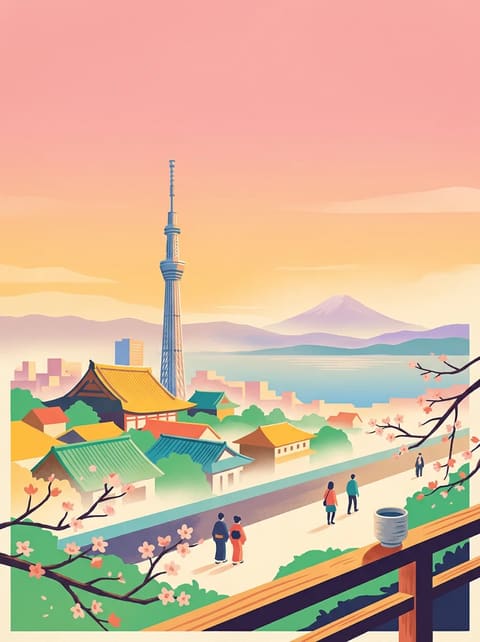
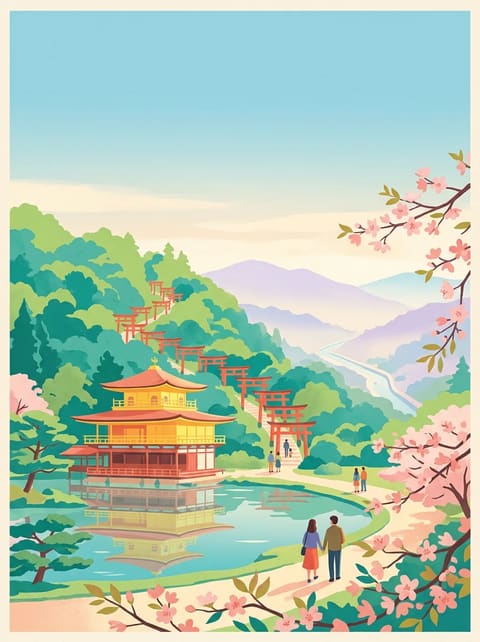
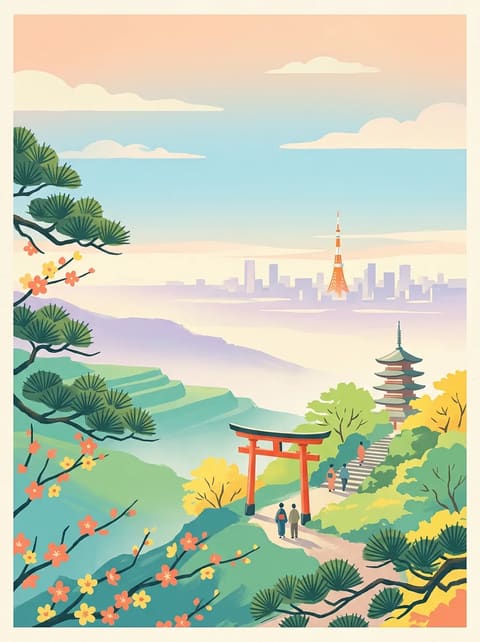
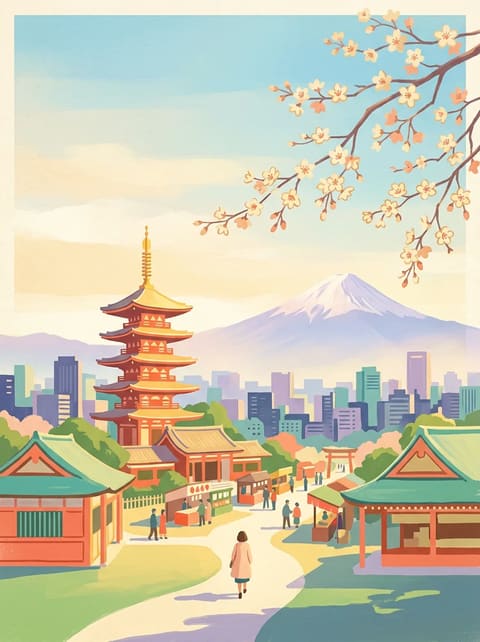
A 5-day Japan itinerary fits Tokyo and Kyoto: two nights in Tokyo, two in Kyoto, and a flight home from Osaka's Kansai airport (KIX) so you never go back to Tokyo. Day 1: land in Tokyo, sunset from the free Shinjuku deck. Day 2: Senso-ji at 8 a.m., then Meiji Jingu, Harajuku and Shibuya. Day 3: the Nozomi to Kyoto (about 2 hours 15 minutes, ¥14,170), Kiyomizu-dera and Gion at dusk. Day 4: Fushimi Inari at 7 a.m., Arashiyama and Kinkaku-ji. Day 5: Nara's deer in the morning, then the train to KIX.
Every stop, time and tip below comes from our own plans (Tokyo in 5 days and Kyoto in 3 days); fares and entry fees were checked on each operator's own site on November 21, 2026.
Is 5 days in Japan enough?
Five days is enough for Tokyo and Kyoto if you fly into one and out of the other, but not for more cities: each extra stop costs half a day of packing and trains. Hiroshima fits from about 12 days, and Hokkaido or Okinawa make trips of their own. If this is your only trip for a while, our Japan itinerary guide shows what 7 and 10 days add.
How should you split 5 days in Japan?
Split 5 days in Japan as 2 nights in Tokyo and 2 in Kyoto, 4 nights in all, flying home from KIX on day 5:
| Day | Base | Plan |
|---|---|---|
| 1 | Tokyo | Land, Shinjuku sunset, yakitori |
| 2 | Tokyo | Asakusa, Meiji Jingu, Harajuku, Shibuya |
| 3 | Kyoto | Nozomi to Kyoto, Kiyomizu-dera, Gion |
| 4 | Kyoto | Fushimi Inari, Arashiyama, Kinkaku-ji |
| 5 | (fly home) | Nara in the morning, train to KIX |
Book flights into Tokyo (Haneda is closest to the city) and home from KIX: an "open-jaw" or "multi-city" search. If your fares only work as a round trip from Tokyo, swap day 5 for a morning Nozomi back to Tokyo.
What is the 5-day Japan itinerary, day by day?
Day by day, the route is Tokyo on days 1 and 2, the Shinkansen to Kyoto on day 3, Kyoto's east and west on days 3 and 4, and Nara on the way to the airport on day 5, with the times from our plans.
Day 1: Arrive in Tokyo, Shinjuku at sunset
Day 1 is light: get to the hotel, then go up the Tokyo Metropolitan Government Building for sunset and eat yakitori in Omoide Yokocho.
- From the airport: the Keikyu line runs from Haneda to Shinagawa in about 14 minutes for ¥330, and the Narita Express from Narita to Tokyo Station in 53 minutes at the fastest for ¥3,140 (Keikyu, JR East).
- 4:30 p.m., Tokyo Metropolitan Government Building: free. The South Deck is open 9:30 a.m. to 10 p.m. and the North Deck to 5:30 p.m., last entry 30 minutes before closing; both close December 29 to 31 and January 2 to 3.
- 6:30 p.m., Omoide Yokocho: yakitori at the charcoal counters, ¥2,000 to ¥3,500; bring cash, as our Tokyo in 5 days plan warns of a ¥300 to ¥500 cover charge.
- 8:30 p.m., Golden Gai: a drink in one of the tiny bars; look for signs that welcome visitors.
Day 2: Asakusa, Meiji Jingu, Harajuku and Shibuya
Day 2 crosses Tokyo from the old east to the young west, so start at 8 a.m. at Senso-ji before the Nakamise stalls open around 9.
- 8:00, Senso-ji, Asakusa: free. Walk Nakamise-dori on the way out and try the ningyo-yaki cakes.
- 10:45, Sumida River: the view of Skytree across the river, 5 minutes from the temple.
- 12:00, lunch in Asakusa: a wagyu sukiyaki lunch set runs ¥3,000 to ¥5,000 (sets from 11:30 a.m. to 3 p.m.).
- 2:00 p.m., Meiji Jingu: the forest shrine, free; then Omotesando and Takeshita Street.
- 4:00 p.m., Shibuya Crossing: watch it from the Starbucks above, then Shibuya Sky at sunset (¥3,400 online from 3 p.m.; book the slot ahead).
- 7:00 p.m., dinner in Shibuya: an izakaya with an English menu posted outside.
Send big suitcases ahead to the Kyoto hotel from your hotel's luggage desk, as our plans do a day or more before each move; hotel desks send them with Yamato Transport's TA-Q-BIN, priced by size and distance. Book Shibuya Sky's sunset slot and any teamLab tickets as soon as your dates are fixed: in our plans they sell out first, and weekdays are easier than weekends.
Day 3: Bullet train to Kyoto, Kiyomizu-dera and Gion
Day 3 is the Shinkansen to Kyoto in the morning and Kyoto's east side in the afternoon. Sit on the right side (seat E) for Mount Fuji, which our plan says shows between Shin-Yokohama and Shizuoka on a clear morning.
- 8:00, Nozomi from Tokyo or Shinagawa to Kyoto: about 2 hours 15 minutes, ¥14,170 with a reserved seat.
- 12:15, Nishiki Market: lunch of skewers and snacks, ¥1,500 to ¥2,500, eaten at the stall, not while walking.
- 2:30 p.m., Kiyomizu-dera: paid entry; opens at 6 a.m. Walk down Sannenzaka and Ninenzaka, the stone lanes below it, where tea houses offer matcha and some run short tea ceremonies.
- 5:00 p.m., Gion and the Shirakawa canal at dusk: free. Don't photograph the private side lanes or follow geiko and maiko.
- 6:30 p.m., dinner: okonomiyaki by the canal (¥2,000 to ¥3,500) or kaiseki in Pontocho (book ahead).
Day 4: Fushimi Inari, Arashiyama and Kinkaku-ji
Day 4 starts at Fushimi Inari at 7 a.m., when the torii path is quiet, and ends in the west of the city.
- 7:00, Fushimi Inari Taisha: free. JR Nara line from Kyoto Station, 5 minutes. Our plan allows 1 hour 45 minutes up to the Yotsutsuji viewpoint and back.
- 10:30, Arashiyama: JR Sagano line to Saga-Arashiyama (about 16 minutes from Kyoto Station); the bamboo grove, Tenryu-ji's garden and Togetsukyo bridge. By late morning the grove is crowded; it is quietest before 8 a.m., so early risers can start there at 7:30 and see Fushimi Inari at dusk instead: the shrine is open 24 hours a day (Kyoto City travel tips).
- 12:30, yudofu (tofu hot pot) lunch: ¥2,500 to ¥6,000; reserve ahead.
- 2:30 p.m., Kinkaku-ji: ¥500; a taxi from Arashiyama takes about 20 minutes. Ryoan-ji's rock garden is a short walk away.
- Evening: Pontocho or the restaurant floors of Kyoto Station.
Day 5: Nara, then fly home from Kansai
Day 5 depends on your flight: with an afternoon or evening flight, spend the morning in Nara; with a morning flight, go straight to KIX.
- 8:00, Kintetsu train from Kyoto to Nara: ¥760 one way, plus ¥520 for a limited express that takes about 35 minutes, per Kintetsu.
- 9:00, Nara Park and Todai-ji: the deer (buy crackers only from the official vendors) and the Great Buddha Hall (¥800).
- To the airport: JR West's HARUKA One-way Ticket for visitors covers Nara to Kansai airport for ¥2,200, with a change of train. Leave 2 hours or more before an international flight.
Where should you stay for 5 days in Japan?
Stay in Shinjuku or near Tokyo Station for the two Tokyo nights, so day 3 starts with an easy train to the Shinkansen, and near Kyoto Station for the two Kyoto nights, so day 5 starts on the platform for Nara and the airport. With only two nights in each, a hotel on top of the station saves more time than a quieter street.
What if it rains during 5 days in Japan?
If it rains, swap the outdoor stops for the covered ones in the same area: teamLab's museums or the Tokyo National Museum (¥1,000; closed Mondays) in Tokyo, Nishiki Market's covered arcade and the temple halls in Kyoto. Fushimi Inari and Arashiyama work in light rain and are quieter in it; the views from the Shibuya Sky roof don't.
Is the JR Pass worth it for 5 days in Japan?
No: the 7-day JR Pass costs ¥50,000, and this itinerary's JR trains (the Nozomi to Kyoto and the train from Nara to KIX) cost ¥16,370 (¥14,170 for the Nozomi and ¥2,200 from Nara to the airport), so the pass would cost ¥33,630 more than the tickets.
How do you get around Tokyo and Kyoto in 5 days?
Get around Tokyo and Kyoto by train, subway and bus with an IC card, not a rental car: the train is quicker between the cities, and parking in both is scarce. An IC card such as JR East's Welcome Suica pays for trains, subways and buses in both cities. In Tokyo, the Tokyo Subway Ticket for visitors covers every Tokyo Metro and Toei subway line for ¥1,000 for 24 hours, ¥1,500 for 48 or ¥2,000 for 72, prices raised on March 14, 2026 (Tokyo Metro). In Kyoto, the subway and bus 1-day pass costs ¥1,100 for adults, per the Kyoto City Transportation Bureau. On the Tokaido and Sanyo Shinkansen, a bag over 160 cm in length, width and height combined needs a reserved seat with an oversized baggage area, and bags over 250 cm aren't allowed (JR Central's oversized baggage rule).
What other 5-day Japan itineraries work?
Three other 5-day routes work well, each with one base or two:
| Route | Best for | Our plan or guide |
|---|---|---|
| Tokyo only, with a Mount Fuji day trip | A first trip with no hotel changes, or with kids (add Tokyo Disney or Odaiba) | Tokyo in 5 days |
| Kyoto 3 nights and Osaka 1, flying into and out of KIX | Temples, food and less train time | Kyoto in 3 days |
| Tokyo 3 nights and a Hakone ryokan night | Hot springs and Fuji views | The Tokyo and Hakone days of Japan in 10 days, one Tokyo day cut |
For three days in Tokyo alone, see 3 days in Tokyo, and for Kyoto, our 2-day Kyoto itinerary.
Can you see Mount Fuji in 5 days?
Yes: from the Shinkansen on day 3 if it's clear, or on a Tokyo-only trip with a day at Lake Kawaguchiko (by highway bus, about 1 hour 45 minutes, ¥2,000 booked online or ¥2,200 at the counter, per Fujikyu). December to February are Tokyo's driest months and the best for a clear view; check a Fuji webcam the night before.
What does a 5-day Japan trip cost?
A 5-day Japan trip costs about ¥131,000 ($820) per person before flights at what US visitors on holiday spent in 2025, ¥32,723 a night over 4 nights (Japan Tourism Agency). On this route, the trains are about ¥17,500 including the Keikyu from Haneda and Kintetsu to Nara, the entry fees about ¥4,700 for Shibuya Sky, Kinkaku-ji and Todai-ji, plus Kiyomizu-dera's fee, and the meals in our plans ¥5,000 to ¥15,000 a day. For the hotel, the US State Department's per diem allows up to $346 a night in Tokyo and $321 in Kyoto (effective June 1, 2026). Our Japan trip cost guide has the full breakdown, and the trip cost calculator starts from those rates for two people.
When is the best time for 5 days in Japan?
Mid-May and November are the best months for a short trip: mild (Tokyo's average high is 74°F in May and 62°F in November, by the Japan Meteorological Agency's normals) and outside Golden Week and the New Year closures. Late March and early April bring the cherry blossoms but the fullest hotels. See when is the best time to visit Japan for every month.
Where do this guide's figures come from?
This guide's figures come from these sources, with fares, fees and dates checked on November 21, 2026: stops and times from Highlights' Tokyo in 5 days and Kyoto in 3 days plans; fares from JR Central, JR West and Kintetsu; JR Pass prices from the Japan Rail Pass site. Cite it as: Highlights, "Japan itinerary for 5 days: Tokyo and Kyoto, day by day", checked November 21, 2026, https://highlights.ai/guides/japan-itinerary-5-days.
Frequently asked questions
Is 5 days in Japan enough for Tokyo and Kyoto?
Yes, with two nights in each and a flight home from Kansai (KIX), so you don't spend half a day going back to Tokyo.
Should I fly into Tokyo or Osaka for 5 days?
Fly into Tokyo (Haneda or Narita) and home from Osaka's KIX, or the reverse. A multi-city ticket often costs about the same as a round trip and saves a day.
Is 5 days in Japan doable with kids?
Yes, with later starts: drop the 7 a.m. Fushimi Inari start, keep Day 2's walking to the mornings, and fold strollers on crowded trains. Book a triple or family room early, since most business hotel rooms sleep two. On JR, children 6 to 11 pay half fare and children under 6 ride free without a seat of their own (JR Central's children's fares).
Can I do Tokyo, Kyoto and Osaka in 5 days?
Only briefly. Osaka is close to Kyoto, so an evening in Dotonbori on day 4 or 5 works, but a full Osaka day means cutting Nara or Arashiyama.
What should I skip with only 5 days in Japan?
On the Tokyo and Kyoto route, skip Hiroshima, Hakone and day trips from Tokyo: each needs a full day, and the route already has one long train ride.
Sources, checked Nov 21, 2026: JR Central, JR West, Japan Rail Pass, Kintetsu, Keikyu, Narita Express, Tokyo Metropolitan Government Building, Shibuya Sky, Kiyomizu-dera, Todai-ji, Yamato Transport, Welcome Suica, Fujikyu, Japan Tourism Agency, US State Department, Japan Meteorological Agency, Tokyo Metro, Tokyo National Museum, Kyoto City Transportation Bureau, oversized baggage, Kyoto City travel tips, children's fares.